EXILE (2025)
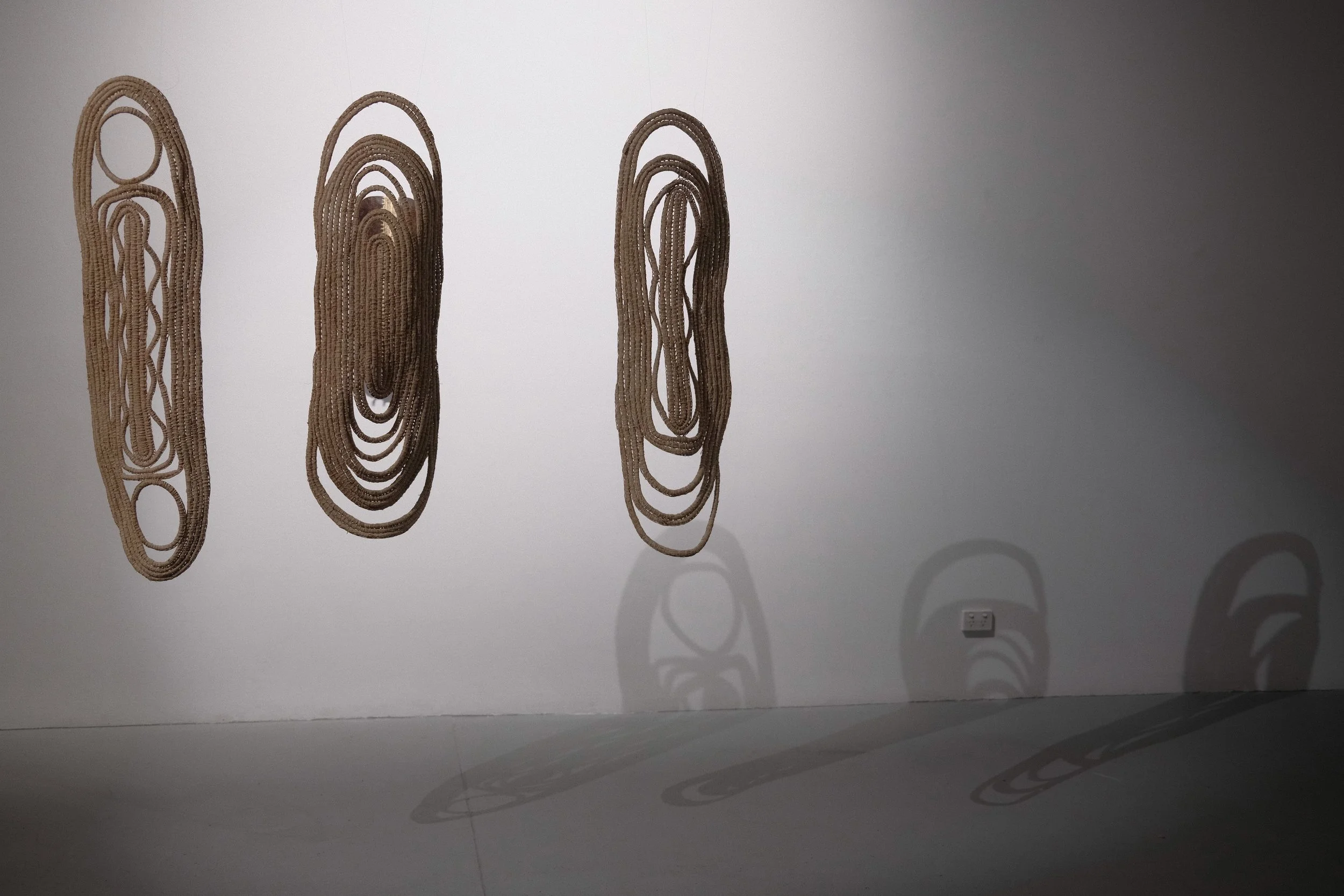
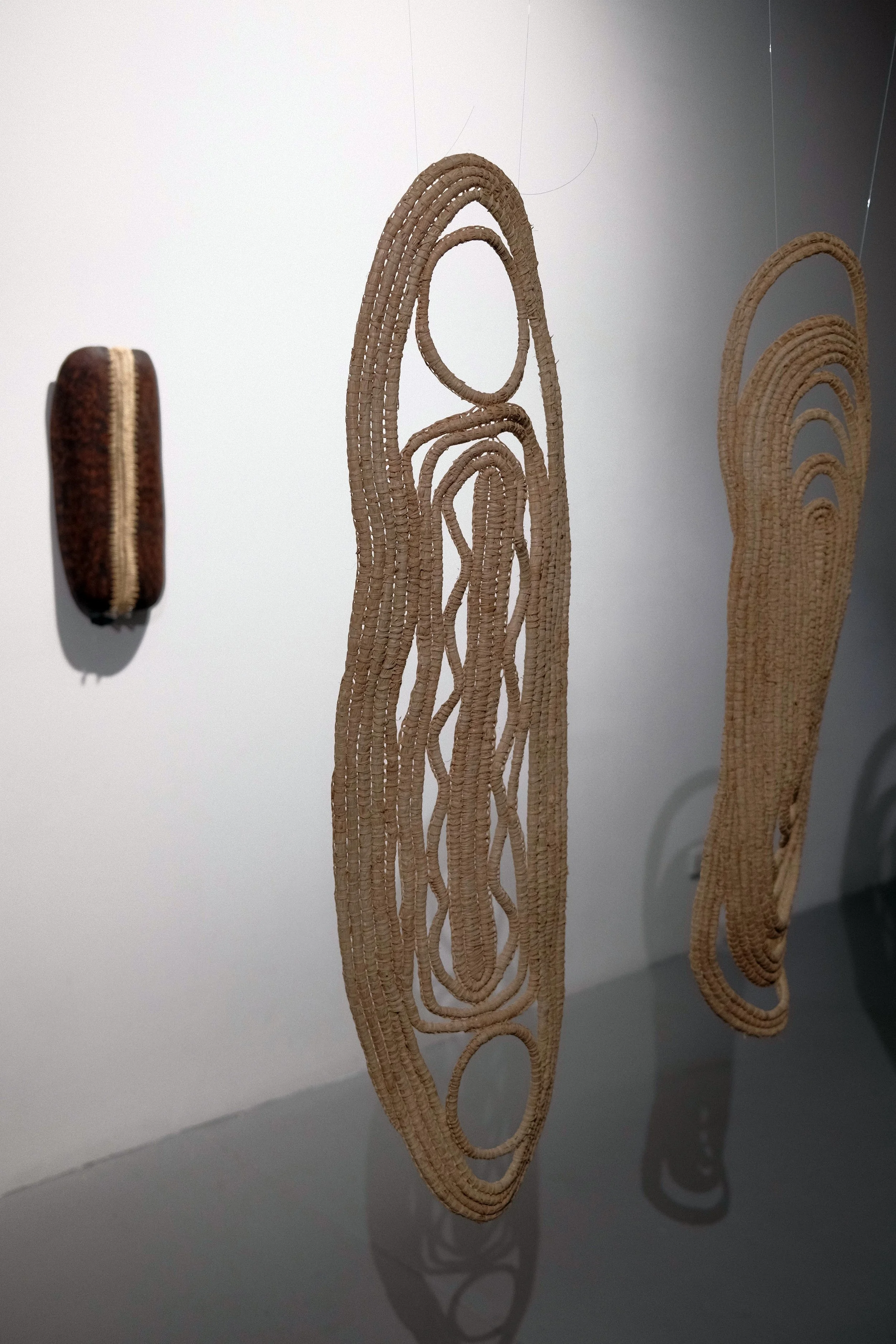
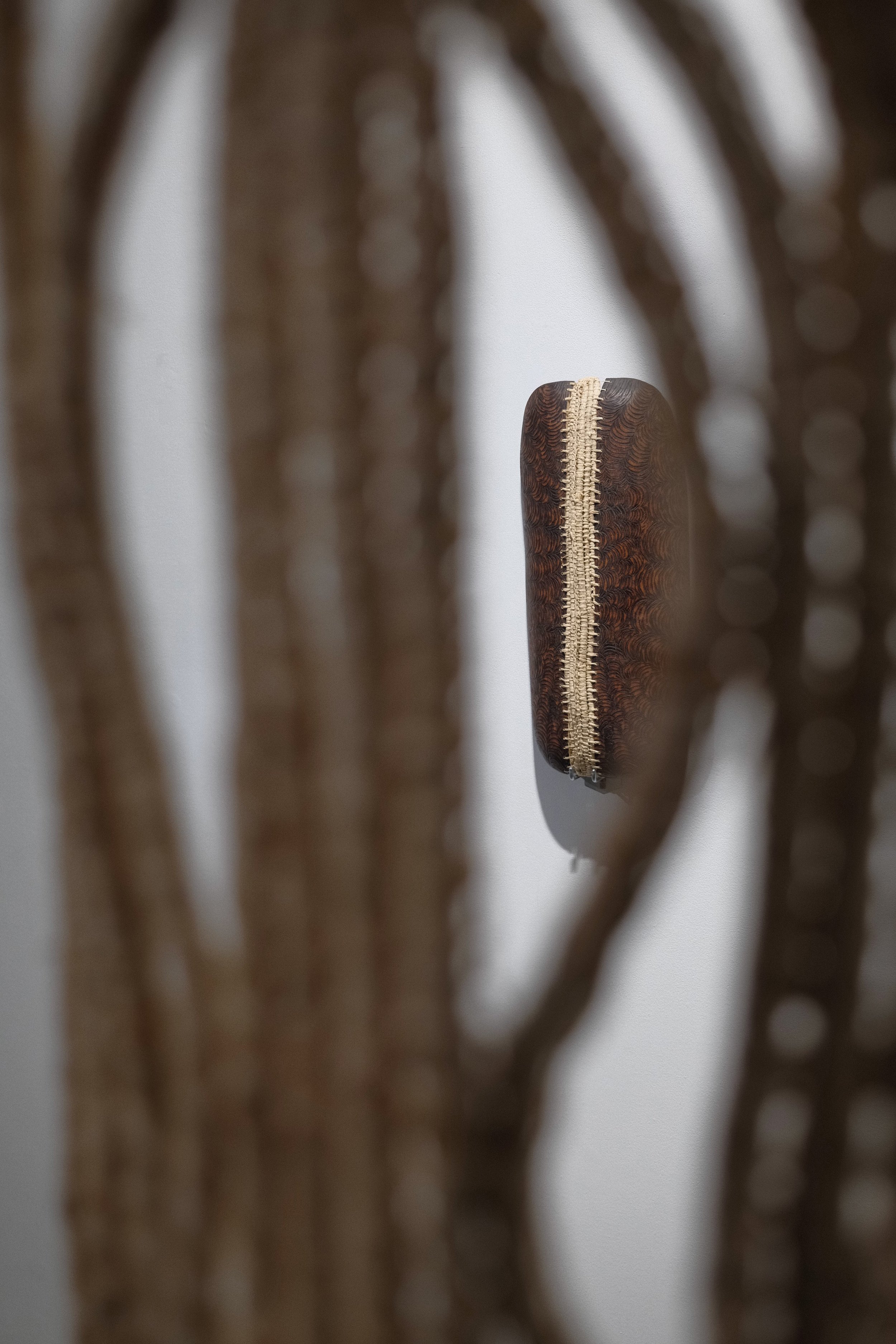
This piece, Exile (2025) is an installation of three woven shields, suspended in a line in front of a gallery wall. Centered on the large, white gallery wall is a wooden Coolamon, split down the middle and woven back together.
The installation, Exile, gets its name from Internal Family Systems Therapy, a type of psychotherapy used to help traumatized people heal. Internal Family Systems therapy grounds itself in multiplicity of the mind - that our personalities consist of various parts that play different roles in living and in healing. The “exile” part in IFS are vulnerable, traumatized parts that often contain memories, feelings or sensations that are so painful that we to and bury, minimize or deny them—putting them into internal exile. Other parts of ourselves protect these parts, doing their best to look after them, but often, keeping them exiled in the process.
Intergenerational trauma is a phrase that is used a lot without a lot of true understanding—it is complex, nuanced, and looks different for everybody. It isn’t just about the idea being traumatized by massacres, dispossession or abuse happening to someone you love—or maybe an ancestor you never met—but about the way this lives on in your body. Studies on descendants of Holocaust survivors found significantly altered cortisol levels, making them less able to adapt to stress and more likely to experience symptoms of PTSD. The impacts of colonisation live on all around us—in the ongoing systems constructed by the colony, in the destruction of Country, in the continuation of the Stolen Generation—but they also live inside our bodies, embedded into our genetic code, passing down from parent to child.
The Coolamon, woven back together after a break, sits vulnerable on a vast, white wall – showing the damage done and the continual work of repair. The shields , suspended in front, offer protection, but not always safety – their shadows lay to the left and right of the piece – ancestral echoes of both strength and resilience, and devastation and loss. Exile is not just a representation of trauma, but of the effort to live with it each day. The installation makes space for the parts of ourselves that have been hidden or cast aside. It asks what it means to hold pain, to protect it, and perhaps, to offer it back to ourselves with care. The work becomes not only a sight of mourning, but a way of showing how people carry trauma and healing at the same time. It reflects the slow, everyday work of living with pain while trying to move forward.
Materials: Raffia, wood, wire.
Woven in Naarm by Georgia Boseley.